
AI automation with guardrails that survive production
By Nocfinity Editorial
Generative models are brilliant at drafting, classifying, and summarizing—but production is not a lab demo. Small inconsistencies compound across tickets, customers, and compliance obligations. The organizations that succeed treat AI-assisted automation like any other critical subsystem: explicit contracts, observable behavior, and recovery paths when the model is wrong.
Guardrails are not “prompt tweaks.” They are the combination of policy (what is allowed), tooling (how proposals become actions), and ownership (who is accountable when outcomes diverge). When those pieces align, teams move faster without surrendering control in the moments that actually matter.
Where automation quietly breaks
Most incidents do not start with a dramatic model failure. They start with ambiguous inputs, partial permissions, or workflows where “approve” becomes a reflex. Teams discover gaps when a refund posts twice, a customer receives the wrong legal language, or an internal tool sends email outside approved domains.
The fix is rarely “more training data.” It is narrowing the blast radius: shorter chains of autonomous steps, structured outputs that validators can reason about, and clear escalation when confidence or policy checks fail. Treat variability as normal—design for it up front.
Boundaries that engineering and ops can enforce
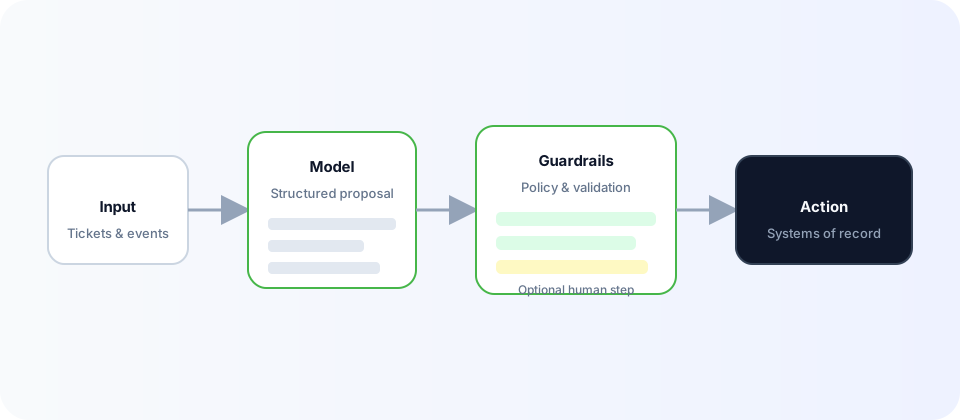
Start by separating proposal from execution. Let the model produce structured intents—categories, extracted fields, draft replies—then run deterministic checks against rules your organization already understands: rate limits, allowlists, spending thresholds, jurisdiction constraints, and retention policies.
- Schema-first outputs (JSON or typed records) so validators and audits have stable shapes to inspect.
- Tool access scoped per workflow: the automation should not inherit broader permissions than a human operator in the same role.
- Idempotent actions and reversibility where feasible—especially for money movement, provisioning, and external messaging.
Approvals without friction theater
Reserve human judgment for decisions that carry material risk or ambiguity—not for every keystroke. Queue-sensitive tasks should surface concise diffs: what changed, why the model believes it is correct, and what happens if the reviewer accepts or rejects. Fast approvals come from great context, not from hiding detail.
Operational clarity matters as much as model quality. When reviewers understand the blast radius and see consistent guardrail failures bucketed by cause, they stop treating exceptions as noise and start steering improvements deliberately.
Evidence your stakeholders can stand behind
Stakeholders outside engineering—risk, finance, customer success—need narratives grounded in evidence. Blend offline evaluation with production signals: stratified holdout sets, regression suites built from real ticket snippets, latency and cost envelopes, and straightforward customer-impact metrics tied to workflows rather than abstract benchmark scores.
If you cannot explain what “wrong” looks like for a workflow, you are not ready to automate it at scale—only to experiment with it.
Bake review rituals into delivery the same way you ship monitoring for APIs: periodic sampling of decisions, periodic refreshes of evaluation sets when language or products shift, and alerts when drift indicators move outside agreed thresholds. The goal is steady confidence—not a one-time sign-off deck.
Shipping guardrails as part of the product
Guardrails age like any other code path. Owners, vendors, and regulations change; prompts and retrieval corpora drift; customer language evolves. Treat guardrail configuration as versioned infrastructure: reviewed changes, staged rollouts, and rollback switches that operators understand.
When boundaries, tooling, and accountability stay aligned, AI automation stops being a fragile demo and becomes a durable capability—one your teams can extend without rebuilding trust from scratch every quarter.
Share
Related posts
4 min read
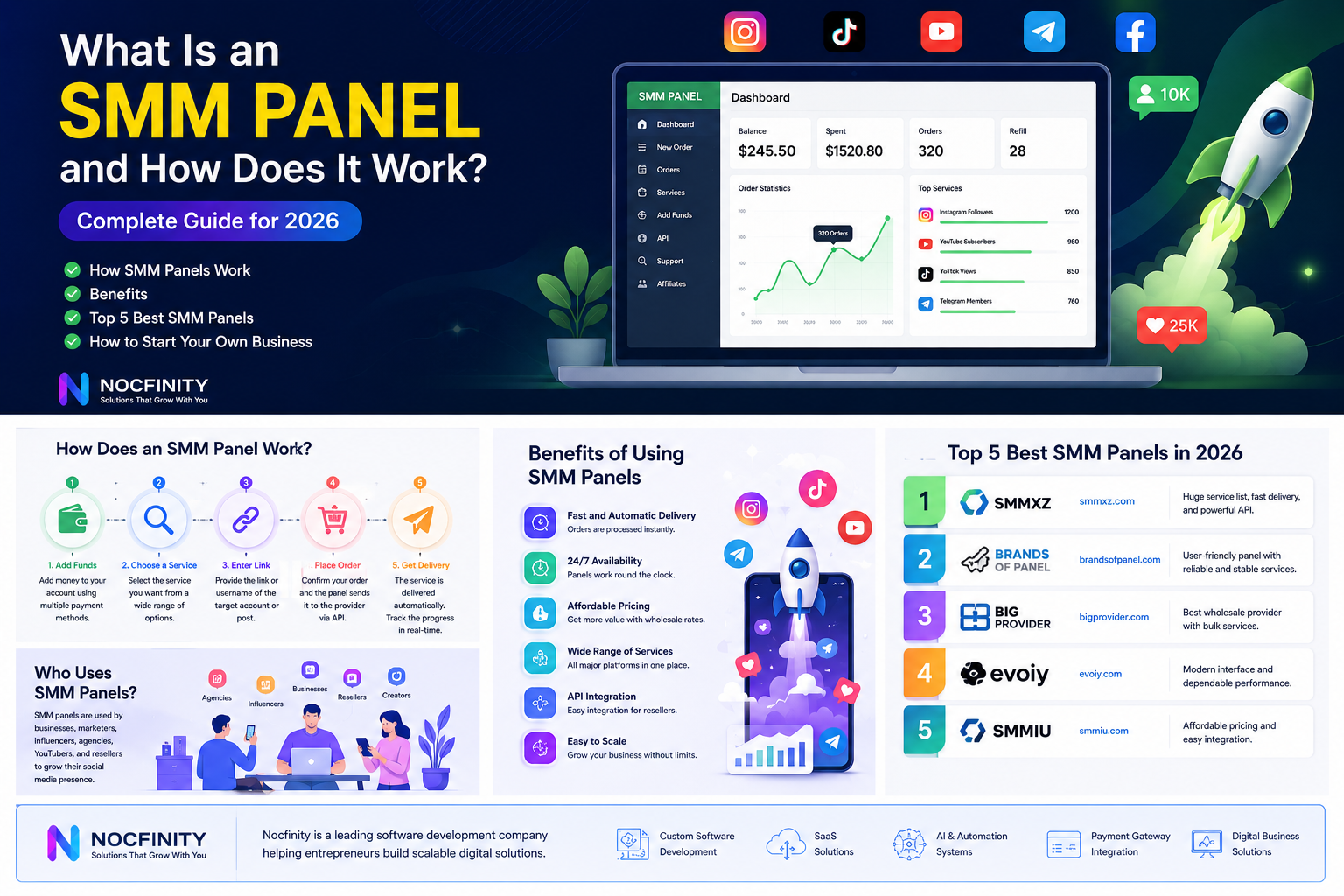
What Is an SMM Panel and How Does It Work? (Complete Beginner’s Guide for 2026)
If you've ever wondered how brands, influencers, and agencies grow their social media accounts quickly, you've probably heard the term SMM Panel. In this guide...
By Md Akramul Hossen
Read articleImplement these ideas with Nocfinity
From software delivery to payments and automation—our teams pair strategy with disciplined engineering execution.